4. Water-Permeable Surface Materials*
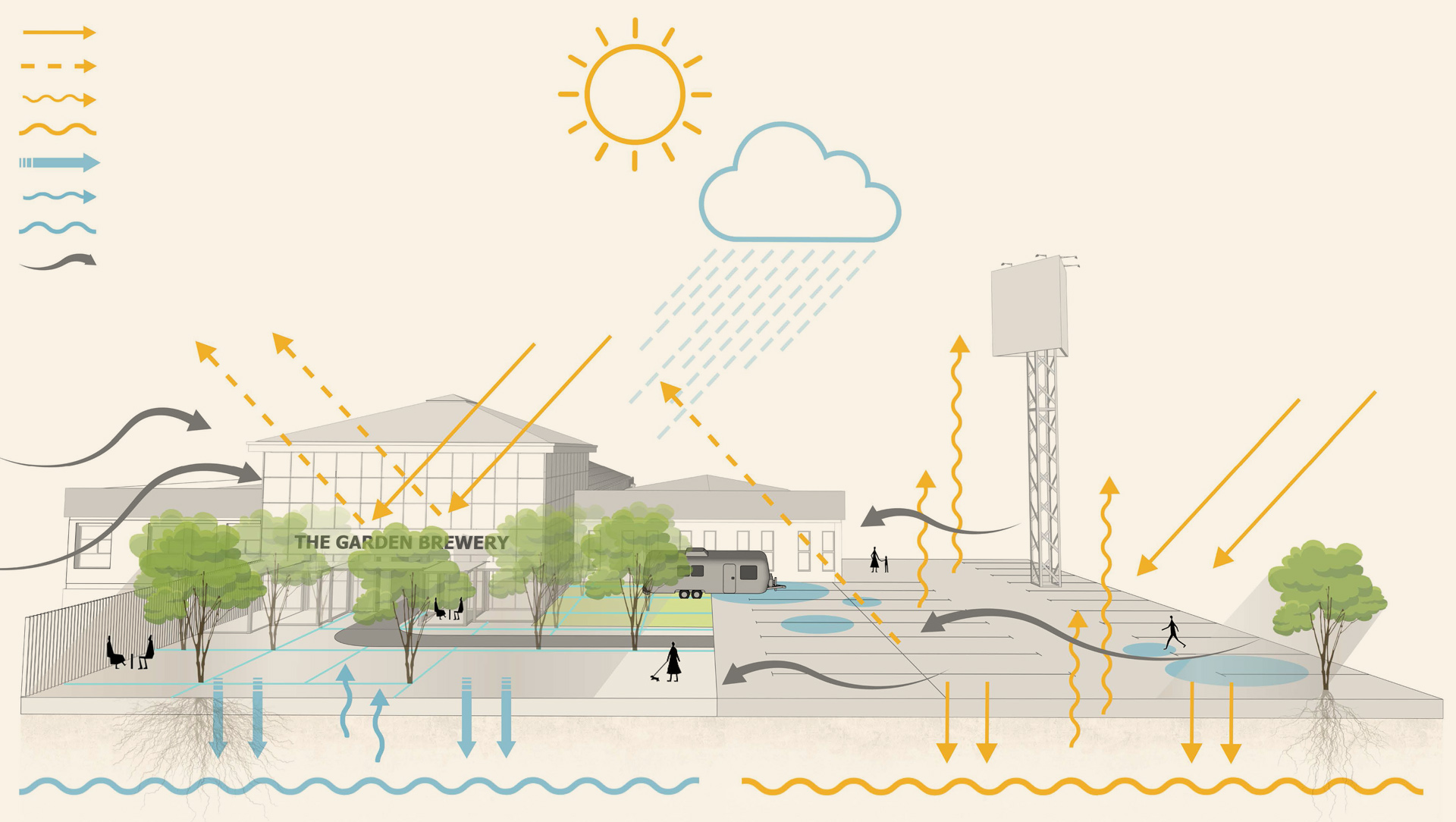
We replaced a large concrete area with a garden with lawn, trees and porous surface materials to allow water flow and re-established a natural hydrological balance, benefiting the environment and our staff and customers via a more pleasant climate
Benefits include
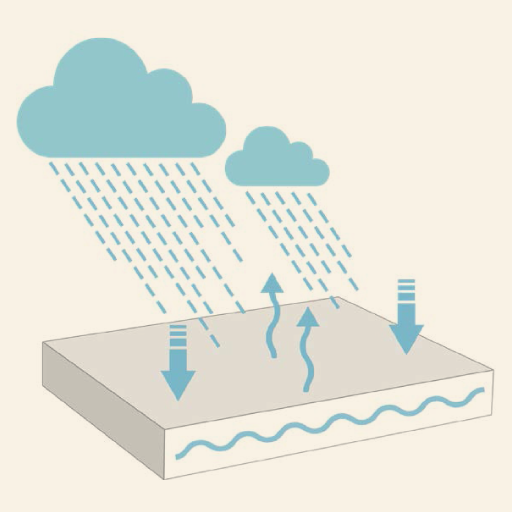
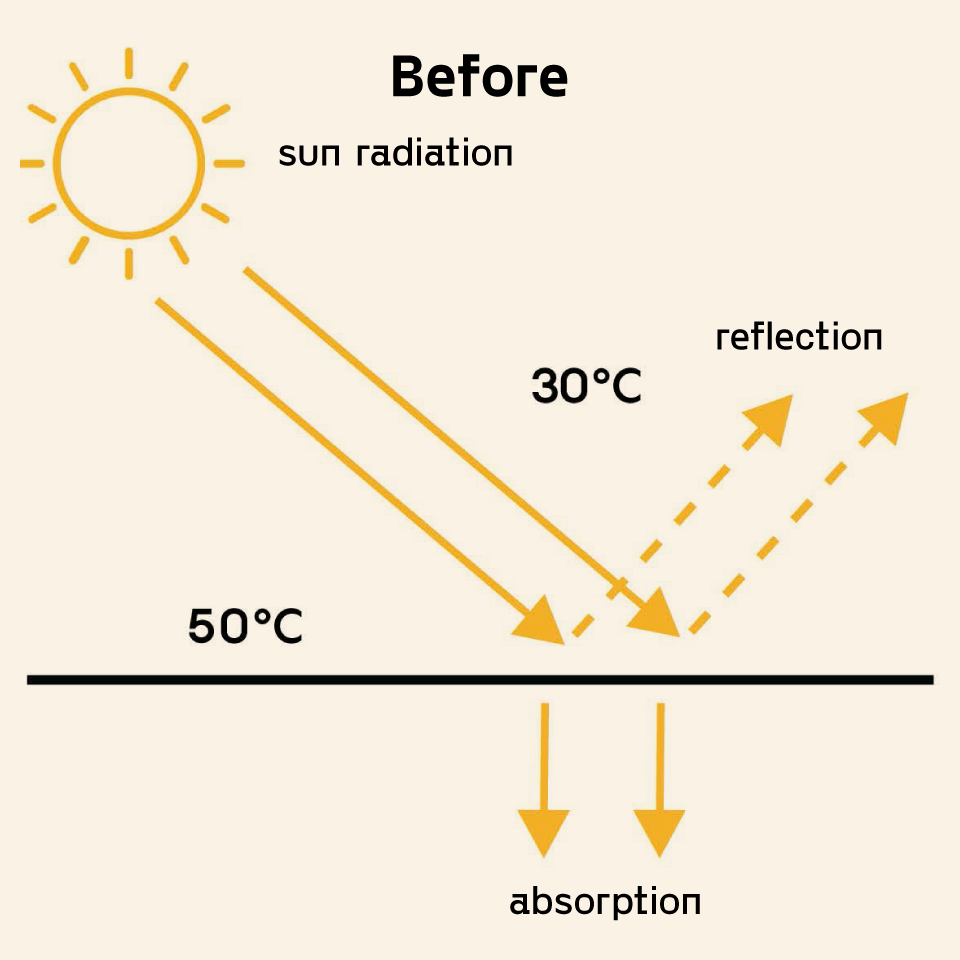
- creation of a new microclimate with lower temperatures (via the cooling of absorbed water evaporation), increased natural moisture and lower dust levels
- replenished groundwater reservoirs with reduced pollutants due to percolation
- increased flood prevention and reduced run-off to gutters and storm drains
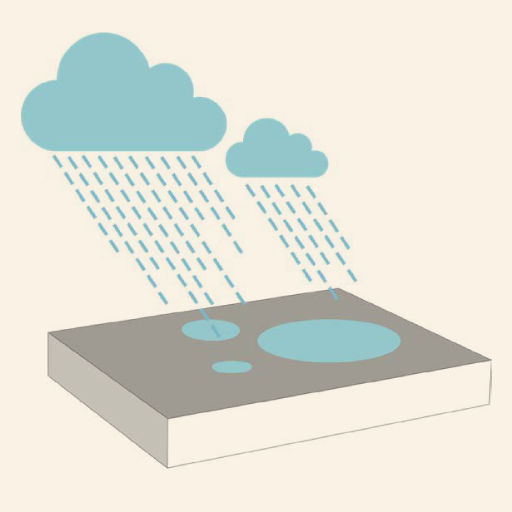
In contrast non-permeable surfaces (like concrete) heat up in sunlight
* Stabilizer 2000 is a decomposed granite with non-toxic, organic binder that produces a water-permeable surface with hollows that retain some rain water that evaporate back into the atmosphere
5. Mycorrhiza: Natural Organic Fertilizer
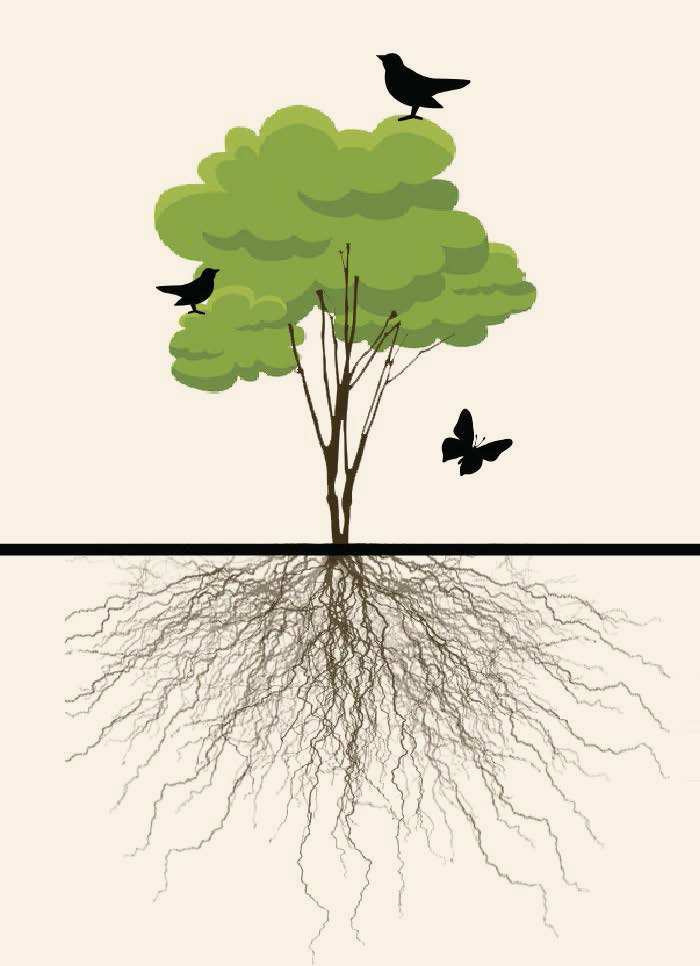
We introduced mycorrhizal filaments; fungi that create symbiotic relationships with plants, in effect extending their root systems, meaning no chemical fertilizers were needed.
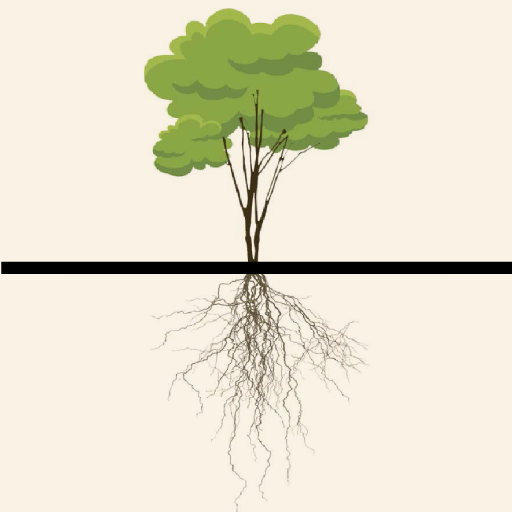
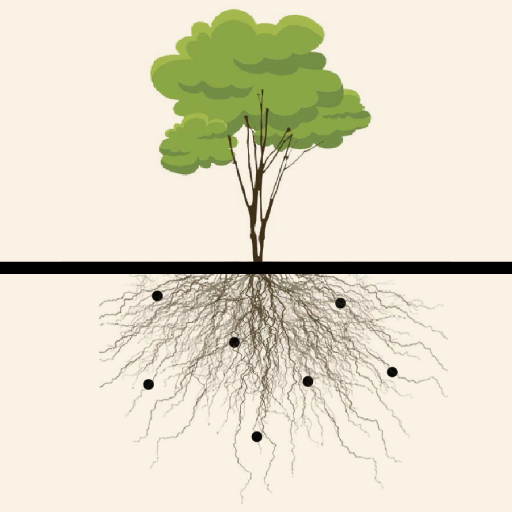
Mycorrhiza
- increase the length and surface area of plants’ root systems
- increase the efficiency of nutrient and water absorption
- release powerful positive organic compounds into the soil
Scientific studies show mycorrhizal populations are slow to recolonize naturally so reintroducing them into areas where they’ve been lost dramatically improves plant health and performance
6. Tree-Planting Creating a Microclimate
Microclimates are created by local differences in heat or water absorbed or emitted near the surface. Human comfort is impacted by environmental variables like solar radiation, air and surface temperature, humidity and wind speed.
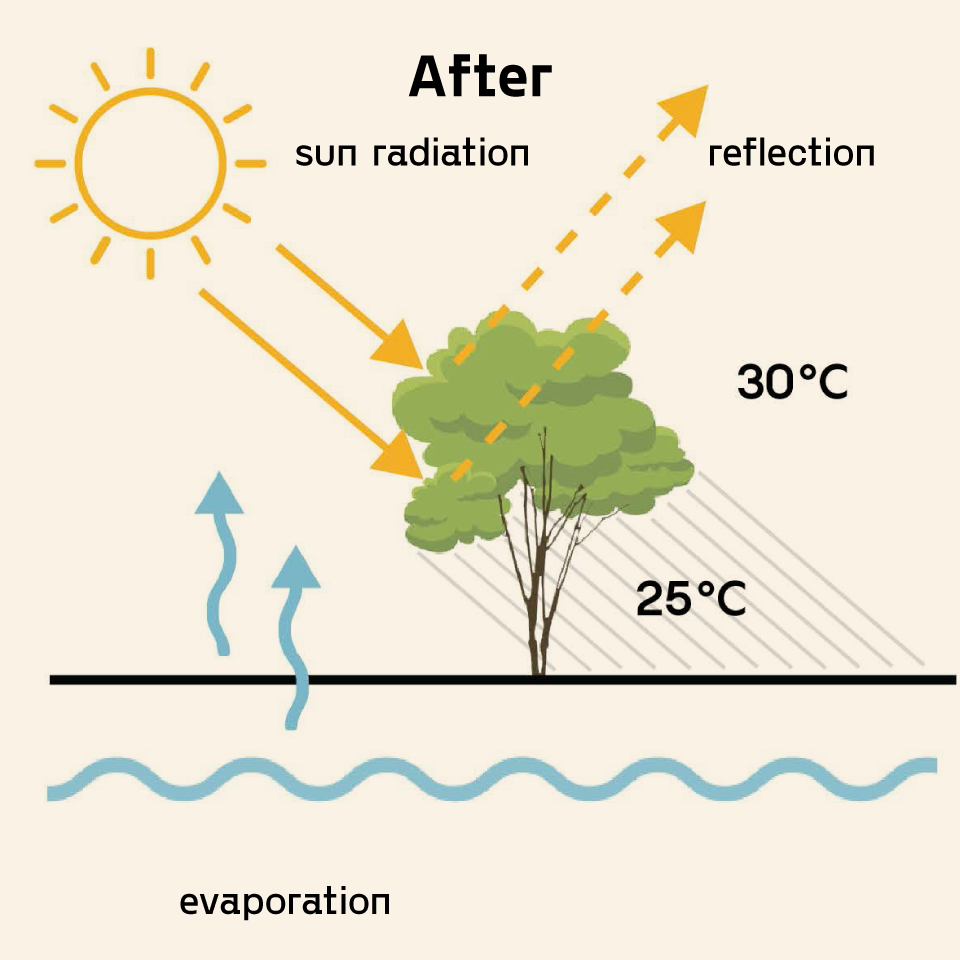
Trees impact urban microclimates in many positive ways, acting as natural air conditioners
- intercept solar radiation
- provide shade
- direct air flow and wind speed
- cool high air temperatures by water evaporation from leaves and soil
- warm cool air temperatures by blocking and slowing wind speed
Positive modification of urban microclimates helps conserve energy and provide passive cooling or warming.
7. Energy-efficient planting
We used self-sustainable species that are
- pest & disease resistant
- drought tolerant (once established)
- long-living
- winter hardy
- suited to the local soil type and pH
This policy will help us develop a local microclimate and an energy-efficient garden that require less water, fertilizer, labour, maintenance and plant replacement
8. Brewery wastewater
We recycle our brewery wastewater on-site to irrigate our entire garden: internal and external plants and trees and our lawn. This not only saves money but also
- reduces our freshwater consumption
- removes the need to transport fresh water to us
9. Eco-friendly materials
We used wood and stone, local, low-energy renewable materials, avoiding plastic and synthetic materials where possible to
- decrease the amount of material sent to landfill
- improve energy and water efficiency
- reduce greenhouse gas emissions
- prevent toxic chemicals from leaching into the soil and waterways
10. We love aluminium cans
Here's 5 reasons why…

Cans are better for the environment, aluminium is 100% "infinitely recyclable" so every part can be used again without loss.
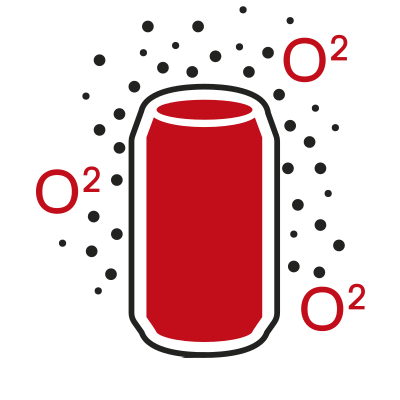
Cans are air-tight, keeping oxygen out and our beers Garden fresh. Oxygen mutes flavour and makes beers taste dull.

Cans are lighter and more compact, meaning less transport costs for us (and pollution) and less arm ache for you for the beach or national park.

UV light damages beer's flavour and aroma by affecting the hops. No light = no damage. Clear glass offers no protection, cans the best.

If you love beer cold - especially in Summer - cans are for you, they chill much faster than glass and you can fit a lot more in the fridge.
11. Spent grain
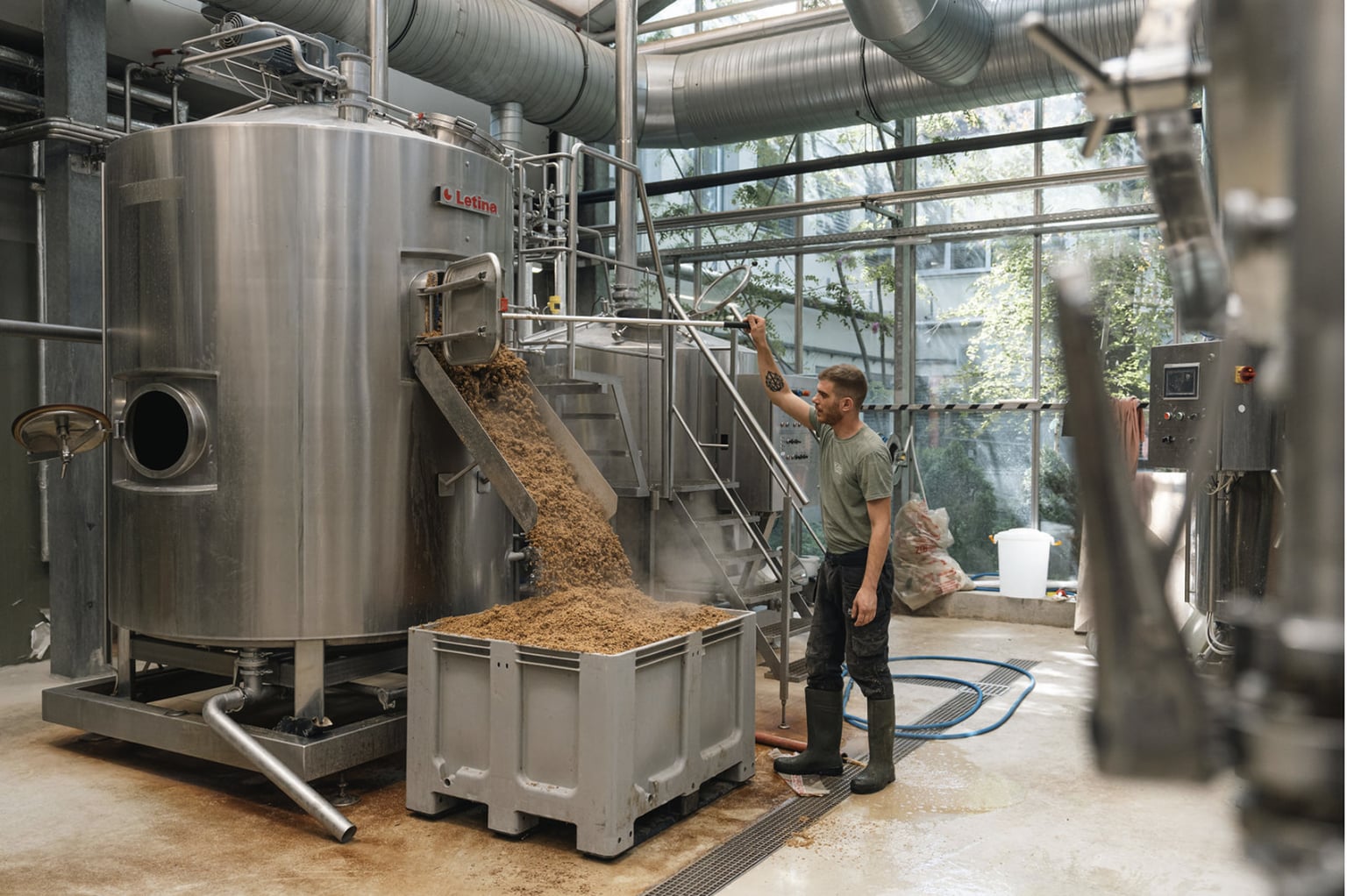
We donate all our used grain (malts, barley, wheats, oats) after brewing to several local farmers as animal feed. This was 280 tonnes in 2025! A lot of waste saved and reused